Portugal’s passport is now ranked 4th globally in the Henley Passport Index, granting visa-free or visa-on-arrival access to 188 destinations. For international buyers and investors considering Portugal real estate investment in 2026, that ranking is worth paying attention to — not because of travel convenience, but because of what it signals: deep international trust, political stability, and a country that has quietly become one of the world’s most credible long-term bases for families, entrepreneurs and capital.
This article breaks down the six structural factors that make Portugal a compelling destination for long-term life and investment, backed by current data.
1. Portugal’s Passport: What a Top-4 Global Ranking Actually Means
How strong is the Portuguese passport?
The Henley Passport Index ranks the Portuguese passport 4th in the world in 2025, reflecting access to 188 destinations without a prior visa. To put that in context: this places Portugal ahead of the United States, Canada and Australia in terms of global mobility.

For investors and families considering relocation, Portuguese nationality is worth understanding in detail:
- Naturalisation timeline: Historically accessible after 5 years of legal residence. Recent reforms announced in 2025 indicate longer timelines may apply: generally 7 years for EU citizens and nationals from Portuguese-speaking countries, and up to 10 years for other foreign nationals.
- Permanent residence: EU citizens obtain the right to permanent residence after 5 consecutive years of legal residence in Portugal.
- Naturalisation requirements: Proven legal residence for the required period, a basic level of Portuguese language (commonly A2), and a clean criminal record.
- 2024 administrative update: A change in administrative practice now allows residence time to potentially be counted from the date of residence application submission, rather than only from the date of permit approval — a meaningful practical benefit for applicants.
Nationality rules evolve, and individual situations should always be confirmed with a qualified immigration lawyer or the relevant Portuguese authorities (IRN and AIMA).
The broader point is this: Portugal’s passport ranking is not a vanity metric. It reflects the same qualities that make the country attractive to investors — openness, stability, and sustained international credibility.
2. Portugal Is Not Emerging — It Is Established
How popular is Portugal as an international destination?
Portugal passed the point of being “up and coming” several years ago. The numbers now confirm a mature, high-volume destination with sustained global demand.
- In 2025, Portugal recorded approximately 33 million guests in tourist accommodation, continuing a record growth trajectory.
- International guests represented over 20 million visitors, confirming Portugal’s strong and diversified global appeal.
- Official statistics estimate more than 30 million non-resident tourist arrivals in 2025, reflecting continued growth compared to 2024.
For real estate investors, this matters because tourism demand is not simply leisure activity — it directly supports:
- Hospitality assets and branded residences
- Retail and food and beverage concepts
- Wellness, services and experience-led developments
- Year-round short-stay and long-stay rental demand
Portugal is not a market where investor demand is driven by speculation. It is driven by people choosing to be here, in large and growing numbers, year after year.
3. Connectivity: Small Country, Global Reach

How well connected is Portugal for international residents and investors?
One of Portugal’s most underappreciated strengths is its connectivity, particularly for international residents and business owners who split their time between multiple countries.
- Lisbon Airport handled approximately 36.1 million passengers in 2025, confirming its role as one of Southern Europe’s fastest-growing international hubs.
- Portugal’s airports collectively reached a record 72.5 million passengers in 2025.
- Lisbon offers scheduled passenger services to approximately 150 destinations, including direct routes to major cities across Europe, North America, Africa and South America.
- Porto Airport serves more than 100 destinations, supporting strong connectivity in the north of the country.
For investors, this infrastructure enables multi-base living — Portugal as a primary or secondary base alongside London, Paris, Geneva, New York or Dubai — without meaningful compromise on access. It also supports strong premium rental demand, driven by corporate mobility, conference traffic and international lifestyle migration.
4. Safety: A Practical Investment Driver, Not Just a Lifestyle Point
Is Portugal a safe country to live in?

Portugal ranked 7th globally in the Global Peace Index (GPI) 2025, maintaining its consistent position among the world’s safest countries. For context, it ranks ahead of every major Western European economy including Germany, France, Spain and the United Kingdom.
Safety is frequently cited as a lifestyle benefit of living in Portugal. What is less often stated is its direct relevance to real estate investment. In markets perceived as safe:
- Family relocation demand is structurally stronger, driving long-term residential occupancy
- International school infrastructure develops and expands, anchoring high-income resident communities
- Long-stay tenants — the most valuable for landlords — are more likely to commit to multi-year leases
- Property values in prime residential areas are more resistant to short-term volatility
Portugal’s safety ranking is one reason why it continues to attract families relocating permanently, not just buyers purchasing holiday homes.
5. International Recognition: Portugal’s Brand at the High End
What awards has Portugal won as a destination?
Awards do not replace market fundamentals, but they confirm how the international market perceives a destination — and perception drives demand.
- Portugal was voted Europe’s Leading Destination 2025 at the World Travel Awards.
- Porto was recognised as Europe’s Leading City Destination 2025 at the same awards.
- The Algarve won World’s Leading Beach Destination at the World Travel Awards, a recognition it has held across both 2024 and 2025.


These are not niche accolades. They reflect consistent top-tier positioning across different segments of the international travel and relocation market — urban, coastal, and luxury. For investors, repeated recognition at this level confirms that Portugal’s appeal is not cyclical or trend-dependent. It is structural.
6. Lisbon Prime Property: What the Numbers Show
What are current property prices and rental yields in Lisbon?
Portugal’s structural strengths converge directly into its prime residential market, and the numbers in Lisbon reflect that clearly.
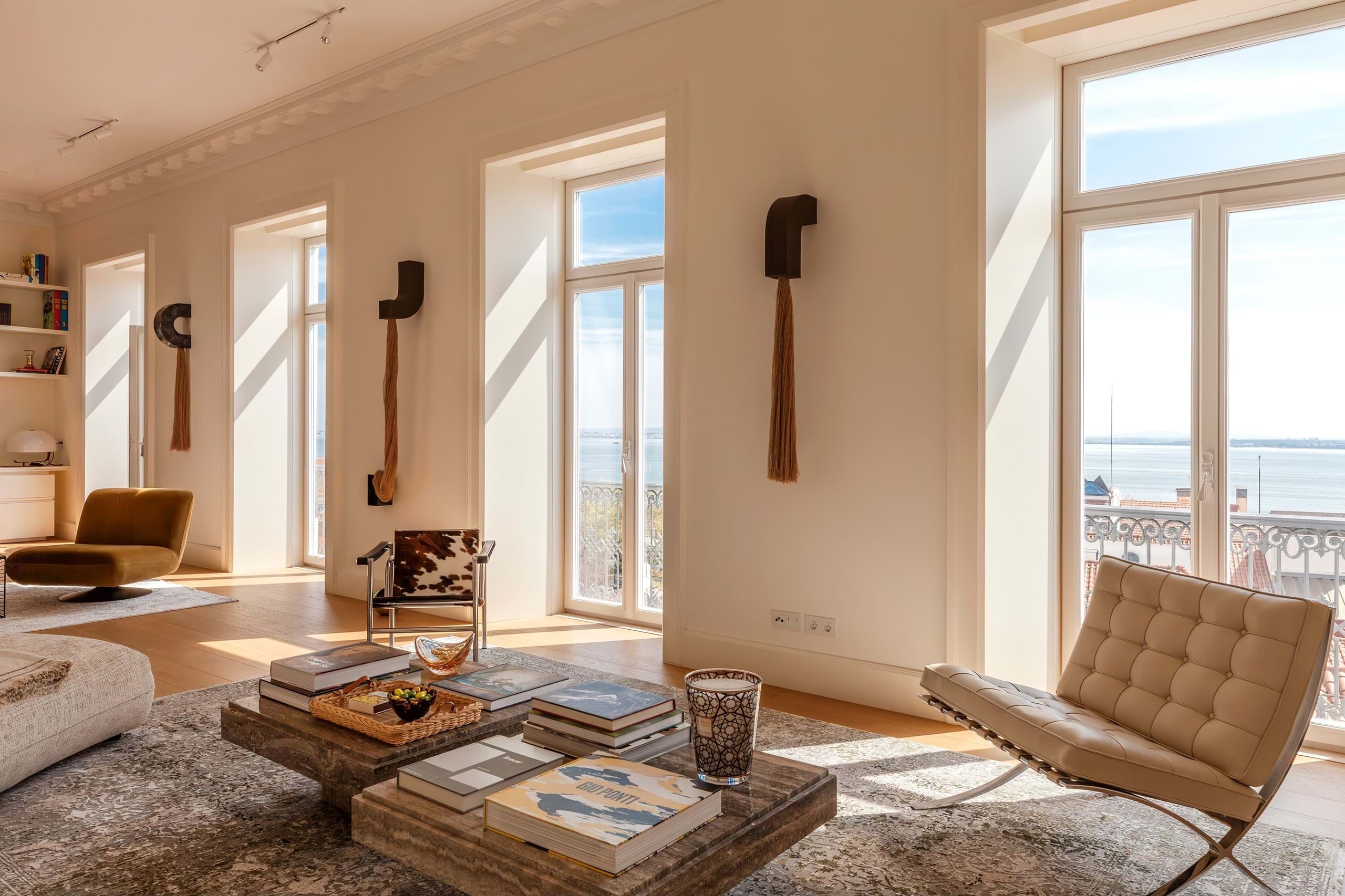
Prime residential values in Lisbon have increased approximately 25% to 35% over the past five years. The most sought-after areas — Avenida da Liberdade, Lapa and Príncipe Real — now achieve between €9,000 and €15,000 per square metre. These are meaningful numbers, but they remain significantly below comparable prime markets in Paris or London, where equivalent locations typically exceed €15,000 to €20,000 per square metre.
International buyers represent an estimated 65% to 75% of transactions in Lisbon’s prime segment. Combined with structurally limited new supply in premium central locations — where planning constraints restrict new development — this sustained global demand supports long-term value stability.
For investors pursuing rental income, gross yields in Lisbon’s premium residential segment typically range between 3% and 5%, with strong occupancy levels driven by lifestyle migration, corporate relocation and long-stay international residents. Portugal’s 2026 housing reforms, which reduce income tax on qualifying rental income from 25% to 10%, improve the net yield picture further for landlords who structure their portfolios under the new frameworks.
Why Portugal Real Estate Investment Makes Sense in 2026
Portugal’s investment case in 2026 rests on a combination of factors that are difficult to find in a single market elsewhere in Europe:
- A top-4 global passport that reflects sustained international credibility
- Record tourism and visitor numbers underpinning rental demand
- Best-in-class global connectivity for multi-base living
- A 7th-place global safety ranking supporting long-term residential demand
- Consistent international recognition across urban, coastal and luxury segments
- Prime property values that remain competitive relative to Paris and London
- New fiscal frameworks reducing tax on qualifying rental income
The question in 2026 is no longer why Portugal. It is where in Portugal, under what structure, and with what strategy — decisions that require local intelligence, legal clarity, and a clear understanding of how each micro-market performs.
At Bonte Filipidis, we help international buyers and investors navigate exactly that: matching property decisions to legal and residency realities, long-term value drivers, lifestyle priorities, and the on-the-ground dynamics of each location.
Contact Bonte Filipidis to discuss your Portugal investment strategy for 2026 and beyond.