Seoul. Tokyo. Madrid. Cape Town. Lisbon. The city just entered one of the most exclusive rankings in global real estate, and the implications for anyone planning to buy luxury property in Lisbon are significant.
The Lisbon property market in 2026 has reached a milestone few predicted a decade ago. In February 2026, Savills published its annual World Cities Prime Residential Index, the most closely watched benchmark in global luxury real estate. The index tracks prime residential property, meaning the top 5 to 10% of each market by price and quality, across 30 world cities. Five stood out as the strongest performers: Seoul, Tokyo, Madrid, Cape Town, and Lisbon.

Why is Lisbon a top 5 global property market in 2026?
Each of the five leading cities is forecast to deliver prime capital value growth above 4% in 2026. Capital value growth is the increase in what a property is worth over time, as distinct from rental income. The global average across the same index is 1.3%, so Lisbon is expected to grow at roughly three times the pace of the typical world city.
To put that in context: Paris, London, and New York, the cities that have defined prime property investment for a generation, are expected to post sub-2% appreciation this year. Lisbon is forecast to outperform them by a factor of two to three and it is doing so while still offering entry prices that those markets abandoned years ago.
This is not a coincidence, it is the result of a specific set of structural conditions worth understanding clearly, because they directly affect what it means to buy in Lisbon and on the Lisbon Riviera right now.
“Lisbon balances an enviable lifestyle offering with robust capital growth prospects, making it a city that property buyers cannot afford to ignore in 2026.” — Alda Filipe, Regional Director, Kronos Homes
What is driving Lisbon’s property market growth?
Lisbon remains buoyed by strong domestic and international demand. While proposed government incentives aim to stimulate supply, prime availability remains tight. That imbalance between constrained supply and rising demand is the engine of capital value growth in any market: when more qualified buyers compete for fewer available homes, prices rise. Savills observes that lifestyle remains the dominant theme for property buyers, underpinning Lisbon’s appeal as one of the leading destinations for high net worth individuals and global talent migration. Climate, safety, culture, connectivity: the same factors that have drawn buyers to this city for a decade have not gone away. What has changed is the scale and the calibre of the demand.
Lisbon ranks 14th out of 30 global cities in average prime residential price per square foot. This mid-tier pricing provides comparative value against established international hubs, enabling buyers to secure high-quality assets at more accessible entry points. In other words, Lisbon real estate is growing faster than Paris or London, from a base price that is still significantly lower.
That combination of strong growth, relative affordability, and constrained supply is precisely what sophisticated investors look for at this stage of a market cycle.
How much does luxury property in Lisbon cost in 2026?
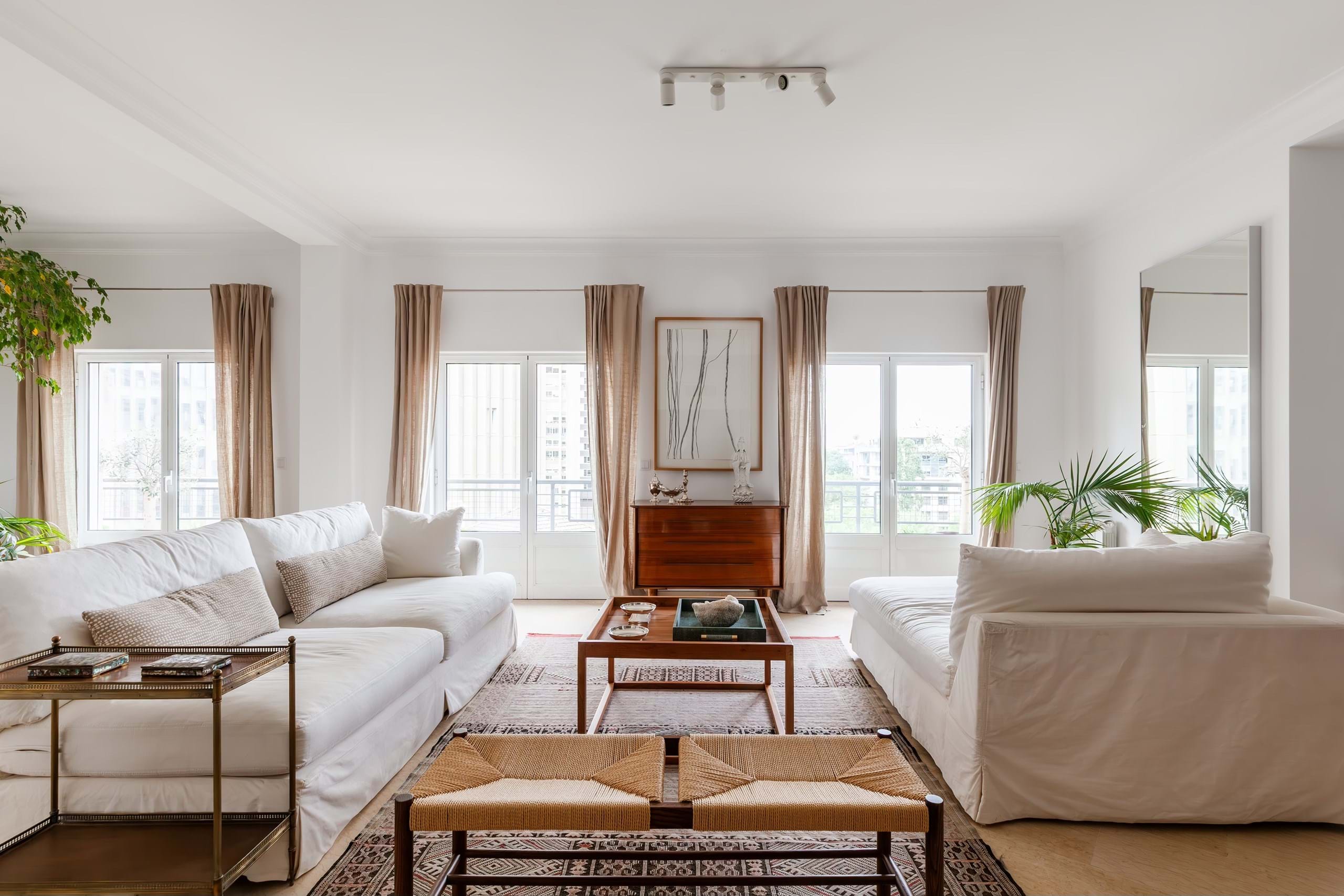
The value of luxury residential properties in Lisbon rose by 22% in prime areas between 2024 and 2025. Prices in Chiado, one of the most sought-after central neighbourhoods, range between €7,000 and €9,500/m², with ultra-prime riverfront addresses reaching €12,000/m². In Marvila, the emerging eastern district where gentrification is running fastest, transactions are already between €3,500 and €5,000/m², with annual price growth exceeding 23% in some segments.
What about Cascais and Estoril real estate?
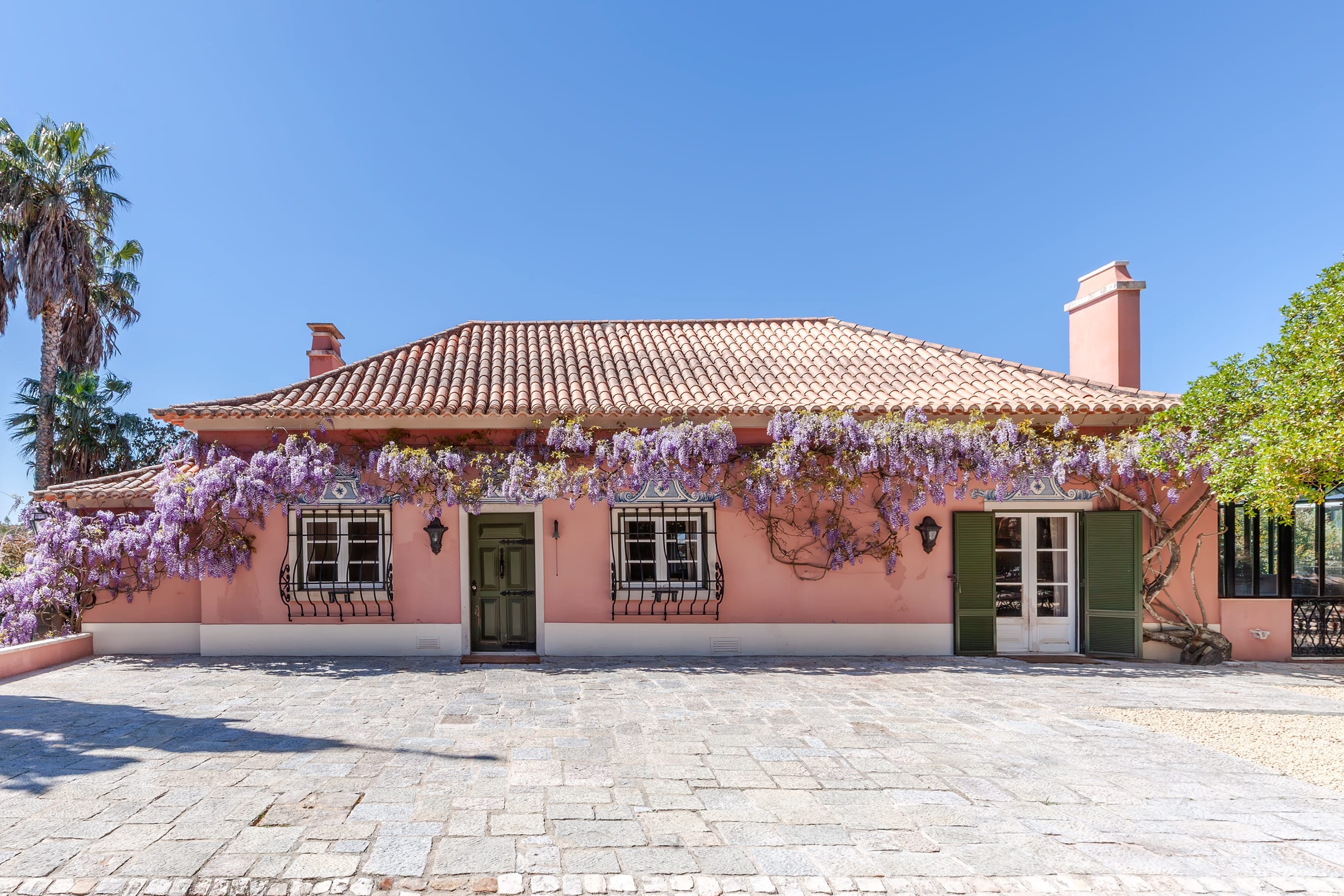
Beyond the capital, the Estoril coast continues to perform. Properties in Cascais and Estoril offer Lisbon-adjacent quality of life with Atlantic frontage, and they represent some of the most supply-constrained addresses in the country. The land exists. The homes on it do not get sold often. For buyers weighing Cascais and Estoril real estate against central Lisbon, the trade-off is simple: fewer transactions and less liquidity, in exchange for coastal lifestyle and scarcity that protects long-term value.
What does the top 5 ranking mean for buyers?
A market in the top 5 globally for capital growth is not the same as a market at risk of overheating. With prime supply constrained, international demand rising, and price growth forecast well above the global average, Lisbon is set to remain firmly on property investors’ watchlists throughout 2026. But the story is more nuanced than a headline ranking suggests.
The buyers who will benefit most from Lisbon’s current trajectory are those who understand the geography, because not all neighbourhoods are performing equally:
- Historic prime areas such as Chiado and Príncipe Real: supply is genuinely scarce and priced accordingly. Entry points are high, but so is the resilience of values.
- Emerging areas such as Marvila: stronger yield potential and faster price appreciation, but with different risk profiles. Yield is the annual rental income as a percentage of the purchase price.
- The Estoril coast: lifestyle and Atlantic frontage continue to attract buyers who are not purely investment-driven but understand that the two are not mutually exclusive.
The buyers who will gain least are those who approach Lisbon as a market to time: buying speculatively, planning to exit quickly, or chasing yield without considering the regulatory environment around short-term rentals. Portugal has tightened licensing rules for short-term lets in recent years, so in 2026 the rental market cannot be approached with the lightness of previous years.
Is 2026 still a good time to invest in Lisbon luxury property?
Lisbon joins Seoul, Tokyo, Madrid, and Cape Town as the only cities expected to exceed 4% appreciation, significantly outperforming the 1.3% global average forecast. This designation underscores Lisbon’s transformation into a premier destination for international luxury real estate investment, driven by lifestyle appeal, consistent foreign demand, and chronic supply shortages in the prime segment. Markets at this stage of a cycle tend to attract two types of buyers: those who act on the fundamentals, and those who wait for full consensus before moving. By the time consensus arrives, the entry point has usually moved. Lisbon property investment is not yet fully priced, but the market is no longer undiscovered. The window between early and obvious is exactly where we are.
How Bonte Filipidis can help you buy a luxury property in Lisbon
We have been operating in this market since 2014. We watched Lisbon climb from overlooked to top five. We know which addresses are genuinely supply-constrained and which are simply well-marketed. We work off-market, meaning we source properties that never appear on public listings, which matters more in a tight supply environment than in any other.
If you are looking at Lisbon, the Estoril coast, or the wider Portuguese luxury market in 2026, the conversation is worth having now.